#13
Serving Those Who Served: Ray Coleman on Veterans, Communication, and Purpose
5/5/26
|
58:55
ABOUT THE EPISODE
In episode 13 of the 365 Proof Podcast, Courtney and Carly sit down with Ray Coleman, Director of Communications for Mississippi Veterans Affairs, for a powerful conversation about leadership, crisis communication, public service, and honoring Mississippi’s veterans.
Ray shares his journey from sports broadcasting to state government, the pressure of communicating during high-stakes situations, and how Mississippi Veterans Affairs serves veterans through benefits assistance, veterans homes, cemeteries, and community support. This episode is a reminder that every veteran has a story worth hearing, a life worth honoring, and benefits they have earned through service.
Produced by Daniel Anderson at Audio Alchemy Productions.
#365ProofPodcast #VeteransAffairs #MississippiVeterans #VeteranSupport #MentalHealthMatters #RecoveryAndPurpose #Leadership #PublicService #MississippiPodcast #AudioAlchemyProductions
Transcript Example
00:00:00 Speaker: Work, but showing up every day is progress. This is the three hundred sixty five proof podcast where we share real stories, honest conversations, and practical insight from mental health experts, addiction specialists and people living the message. If you’re looking for guidance, inspiration, or real insight into recovery and purpose, you’re in the right place. Oh hey everybody, we’re back again. This is the three hundred sixty five proof podcast. I’m Courtney and I am your host today. Daniel is out. So I’m hosting and we have Carly Carver as the co-host today. Happy to be here. Yep. All right. So we’ve got a great conversation lined up today. Joining us is Ray Coleman, director of communications for Mississippi Veterans Affairs. And what I love about Ray’s background is he didn’t just step into this world. He’s lived on both sides of it. He spent years in television as a sports director and reporter at Wotv, an ABC affiliate. I want to throw that in there so he knows how stories are told, but now he’s in the position of shaping those stories, especially when it comes to public information. Crisis situations and serving veterans across the state. So today we’re going to talk about communication, pressure, purpose and what it really looks like behind the scenes when the public is depending on you to get it right. Yeah. So take us back a little. How how did you get here? Well, um, a lot of hard work, a lot of patience, a lot of blessings. Um, and just knowing the right people, to be quite honest with you and knowing the right people, that is a journey in itself, whether it be getting your foot in the door, connecting with folks. Um, a lot of times you feel like you don’t know until you know the right person. I think a lot of times we hear the cliché, it’s not what you know is who you know. Um, and in certain cases that is, that is the case. It really is. Absolutely. So for me, um, I knew I wanted to do this and by this I mean communicate and connect. I’ve known that since I was a child. Um, now what avenue. You know that part I didn’t know, but I always knew that my calling was going to be to connect and communicate with people. Relaying messages, whatever that might be. And that’s been tailored over the years. You know, I went to school for mass communications. When I got out, I thought I wanted to be famous and on TV. That’s what I thought. Yeah. Me too. Right. Um, and then I quickly realized, well, that’s not what I wanted. I knew I loved sports. Um, and so I knew that that would be an avenue for me to use my talents. And so I took that and ran with it in terms of television broadcasting, and I was able to work at WAPT for almost a decade and doing those things and covering sporting events across the state in our nation. That led to honestly, me being burnt out after ten years and realizing that I wanted to do something different. Um, and also, you know, being married and understanding that I wanted to give more time to my family that helped me make that decision a lot quicker. So I easily, and I do mean easily transition out of television to state government in terms of the communications world. Um, for me, it was a natural transition really. Yeah, it really was a natural transition into understanding what I did every day in television was taking a lot of information and condensing it every single day. And I had great repetition in that. Right. Five days a week, sometimes six and seven days a week straight, of taking this type of information and whittling it down to this for for the consumer, the end user. And so for me, that was an easy transition. Now the idea of crisis communication may not have been an easy transition, but the idea of relaying information that was easy. When I got into the Mississippi Emergency Management Agency learning the terminology, I’m learning a new way of doing things, sure. But the idea of relaying that information, that came very quickly for me. Wow, that’s that’s interesting journey. I like that. I have a question about that. So what do you do throughout, you know, both of those big things to me, they’re to me, they’re polar opposites. But I like how you connected them and it makes sense. Those are both very high pressure situations. Yes they are. So what do you do in those high pressure moments to actually sit still, look at what is important to relay, how to relay them. Because I know over, you know, the last decade, communications and the way that we communicate has changed. So much has changed dramatically. And question. Yeah. Great question. Um, and the way that I look at it, like how I produce information now is truly a twenty year journey. I’ve gone from graduating college to where I am now, and I have done this job at so many different levels. Um, they are high pressure just in different ways, right? Um, life safety information versus, you know, current event information. It is delivered differently. Um, I can remember freaking out the first time that I knew that I was going to be on television. It was going to be live. There was no redo. Mhm. Um, and in my mind, I bombed in reality, I probably bombed too, but, um, it was a learning experience and I quickly adjusted to what good looks like and all that is, is having to go back out and do it again. Yeah. Um, so that I don’t want to say confidence, but that understanding that I was going to go and do it again, whether it was good, bad or indifferent, that kind of helped me just get over the fear factor right on the television side, right as you migrate to the government side. The stakes in my mind went up because we’re talking about life safety information at the first place that I worked. Being the Emergency Management Agency. So we’re talking about, you know, tornado preparedness, hurricane awareness, um, you know, terrorist threats depending on, on your topic, right? And these are information bits that people need in real time. And in my brain, it’s like, you can’t screw it up. Mhm. And that’s a lot of pressure. It is. Um, I can remember the first time I freaked out in my first deal. I’ll tell you a quick story, please, and we’ll get through it. So the first week that I worked at Mema, Mississippi Emergency Management Agency, um, the sale to me was. Ray, you’re going to love leaving work every day at five o’clock, because in television, I’m the nighttime guy, right? I get in to work at one p m, I leave at eleven p m. So it’s like this idea that you’re going to leave every day at five o’clock. I love that idea. My first week we had a disaster. It was a mine collapse in South Mississippi. And, um, my first week, it happened on a Friday, and I got down there and in my first week with no formal training, I had cameras in my face from CNN, Fox News, the local affiliates that I had just worked for. And with all in my face looking to me for information, um, in real time with the microphone, with a microphone. And I am overwhelmed, you know, beyond recognition, to be quite honest. Yeah. And I bombed. I did, but also I felt like I had accomplished something at the same time because I’m like, if that is it with no training, if I can do that, then I can do anything in this game. Um, and that lasted for a week, by the way. So that idea of going home at five o’clock never happened. I was going to say I don’t I don’t think it never happened by five. I think at best I was home at eleven p m like I was like I was on television. Um, but, but in all seriousness, I was trying to convey something that happened. And while it wasn’t an immediate threat to the public, lives were lost. Right? Blame was, was, was being thrown around from different agencies, different entities at different levels. And so you realize like, man, your old job is a little bit different now, right? I’m reporting finals and championships versus life safety information. And so it just made me go back and regroup and say, what did you do well, at your last stop that you can bring over to this, right? And when I, when I look at it that way, it was very easy to understand that like, you’ve done live TV for ten years, right? You just got to figure out how to do it on this end. Um, the transition of writing stuff out was a little bit different because I’m used to writing in a very conversational way for ten years, but now I have to go more formal in terms of press releases and social media, right? Um, but that’s just a learning tool. I did a lot of training when I got to Lima. Traveling out of state to different conferences and, uh, leadership groups and things like that to get better at that craft. I’m always wanting to get better. So what do you think? Put that in your brain to want to go after where you knew your passion was? Yeah. What? Communicate and connect. Communicate. And what do you think was the moment or moments that shaped you to be that way and have that mindset? You know, I am a talker. My wife will tell you that she’s very reserved, and she always says that Ray will talk to anybody, and that’s a fact. That’s a fact. So I know, if anything, if I don’t understand anything else, that my life has to revolve around communication because I can’t be at the desk all day. Guy, loner. I don’t work well in that setting. I have to be out doing this very thing. I do, I have to, you’re a people person, a people person and. Right. So I can’t do something that doesn’t allow me to be out and about and connecting with people, right? Um, that’s my word. That’s my own personal, healthy journey in my career. Um, when we talk about the effectiveness that it has on others, well, I know how to take people that maybe don’t think alike, don’t look alike, whatever that is, and bring them to a common space where they can feel comfortable talking to each other. I do consider myself. I do consider myself a uniter in that in that space. Um, maybe you can’t learn that. Yeah, maybe not the best. Maybe not the best. But I do feel like I can. I can bring people together to have conversations, right? So when you recognize that, the question then is, what do you do with it? Are you just going to hang on to that, sit on that gift and not use it? Or are you going to use it now? I would do that if I wasn’t getting paid, but obviously if I know I have the gift, I might as well get paid, right? You know what I mean? So, um, that’s why I still freelance doing play by play for Clinton High School. Working with Mhsaa for their championships because I know I have the gift to do it. Yeah, it’s not an egotistical thing. It’s just I know that I’m good at what I do. I love it, so why not continue to do it? But also in the game that I’m in on the government side, use it as a service in my case. Now. Um, use it as a service to America’s best. And that’s our veterans. Awesome. Yeah. On that note, I’d love to hear about what the Veterans Affairs Office does. Just a big overview. Sure. Um, and I also feel it might be important to share what is the difference between, you know, stateside versus federal? Yeah. And it’s a great question because I’ll tell you, when I showed up to this job day one, I had no clue of the difference between state VA, which is what we are versus the United States Department of Veterans Affairs. If you would have asked Rei day one, it just would have been it’s all under one umbrella. Yeah. Right, right. And it’s not. And that is something that I will be honest with you. I constantly Battle with to try to decipher. Not that like I’m trying to separate us and saying we’re better than them or we’re not them, but we want people to understand what services are available where, right? So that is a mission that I battle with every single day because folks think, just like I do, that it’s all under one umbrella. That’s what I thought. So that’s the first thing. Yeah. Now knowing that the best way for me to break it down is that our federal partner, the VA, they are in charge of, if you think of it in this way, hospitals. Okay. So that that immediate care and that long term care from a mental health standpoint. So physical, mental, spiritual, whatever you want to call it. They are there in that space. Clinical that space. Okay. All right. That’s hospital. Hospital. Thank hospital. Think hospital. Think medical. Think long term in that space. Those are our federal partners on the state side. It’s real simple. We have three pillar programs I like to call it. Um, long term care from a nursing perspective. So our aging veterans, long term veterans homes, we have five of those across the state. And I’ll get into that. Um, we also have the cemetery program here in the state. So we own and operate the veterans homes in Kilmichael, excuse me, veterans cemeteries and Kilmichael and Newton. Um, there are federal cemeteries located throughout the state of Mississippi that would be like the one in Vicksburg, the military park and cemetery. There’s one in Biloxi, I believe. Um, but the two that you see in Newton and Kilmichael, we own and operate those. And then the one that I think touches everyone in the state of Mississippi when we’re talking about from the veteran’s perspective is the VBS veterans benefit specialist veterans benefit services. Um, if you have ever filed a claim, if you need to file a claim, if you don’t know how to file a claim, we can help you with that. That’s huge. And that’s huge. And listen, the federal side does it too. Um, that’s kind of like something that is such an immediate need. If you have VA attached to your name, you’re probably in on it at some point because benefits claimed. That’s the way that you give back to the veteran, that veteran who has gone on and served and lost their hearing because they were a part of the artillery unit or, you know, in battle, they were wounded when they come back home. They have to file claims to get these benefits. And whether it’s right or wrong, that is the process. And so state VA and federal VA help out with that. That is non-negotiable. Um, but here’s but here’s the difference. When we’re talking about a veteran coming to the state, you come to us, we have people who that’s all they do and they will help you at no cost. I know a lot of times they’re a conversation or you see commercials geared towards, hey, we’ll help you file this claim and get you, um, twenty thousand dollars guaranteed based on you losing your hearing or have you ever been affected by Agent Orange like you hear these terms that probably mean nothing to the general public, but to a veteran, they know because they have served in a certain area, they’re at risk for certain deficiencies. Well, we have what we call the sharks that are out here that are saying, hey, we’ll help you, but we’ll take ten percent of your settlement. Yeah, but we’ll guarantee you twenty thousand dollars. Well, that sounds good and too good. Too good. And by no means am I telling people to not try different avenues. I’m just simply here to tell you as a state agency, you know, Mississippi Veterans Affairs is here to help you at no cost because the cost is you’ve already earned it by going out and serving your country. I will say I’ve gotten to see firsthand. Chris Ellis is in your office, and he has come out to our facility at Defining Wellness to work with veterans and go over their benefits, even if it’s just to help the veteran understand what they have or what they could get. All of that. But the kindness that your office has shown our veterans just firsthand, from what I’ve seen, has been incredible. And the time that you guys take with each of them, part of it is an educational piece. I’ll tell you that because a lot of our veterans in Mississippi, they don’t know what they’re entitled to. Yeah. Um, and you don’t know what you don’t know. So you have to be educated on that. So that is a huge, huge piece, right? Um, the other thing I’ll say is when a veteran or a veterans family member comes to us and by the way, by to us, I mean, you can come to our office in Jackson. You can visit us just about anywhere that you live in this state. So if you live in North Mississippi, um, you have options. So if you live in Tupelo, um, in Lafayette County, there is a, or in Lee County, there is a veteran service officer in your county. He’s probably at a county office. He or she is probably at a county office. Um, or you can reach out to one of ours who are going to be probably at a, um, institution of higher learning, meaning like Ole Miss, Mississippi State, Delta State, Jackson State, Southern Miss. We have on staff, state workers in those institutions that are ready to help you, like at a moment’s notice. If you would rather deal with somebody that’s in your county, County veteran service officers are available. You just go to our website and you can find out who’s the closest person to you. It’s that simple. Wow. You can make an appointment, you can walk in whatever you need. You can go in there and they can take you through it step by step. If you’ve never filed a claim in your life or you filed fifty claims in your life, you come in and they’ll help you with the claim number fifty or claim number one. They’ll help you walk through that. That’s awesome. That’s incredible. And it’s important because again, if a veteran for sure, if a veteran has been deployed nine times out of ten, they need to file a claim. They need to. Some of them may not want to because they are well off in life. And that’s fine. But I still encourage them, you know, regardless of what your financial status is in this life. File a claim because you have earned that right to do so. Right? Yeah, right. Tell me about the homes. My favorite part. Go. My favorite part. Um, simply because that’s the part that nine times out of ten I’m most involved in. I’m a non veteran, so I don’t have that expertise nor that experience to talk to a veteran about filing a claim. I can point them in the right direction. Sure. I work with great veterans. My building is full of them and they, um, have the best stories, which is my favorite part when I go into the home. So we have five veterans homes located throughout the state and it is strategic. Oxford, Kosciusko, Jackson, Collins and the Mississippi Gulf Coast, which is in a traditional community. Um, that’s our newest one. And I always brag on that one now because we want to, you know, let people know that it’s there, right? That it’s brand new, that it’s state of the art. Um, it’s located once again in the traditional community, One hundred private rooms. That’s important because the VA recently has changed their guidance on how they want their veterans homes built. All of our other ones were built. I think the the youngest one prior to this one was built in the eighties, and they’re all double occupancy. So everyone has a roommate. Now you can pay extra for a private room if we have that ability, that space available. Um, but for the most part, it’s double occupancy. So you have to have a roommate. Um, in addition single rooms and it is, I’m telling you, it’s unlike anything I’ve ever seen. Our for veterans homes, the older ones are one hundred and forty four thousand square feet, if I’m not mistaken. This one is double that. Whoa. So you’re getting double the size, but one hundred rooms versus one hundred and fifty rooms at the other four. Um, all of them, though, all of them are built around this premise. Superior care, superior service, because we’re talking about our aging veterans that have served from World War two, Vietnam, Korea. So they’re a little older in age. They need a little bit more compassionate care. But that’s what we specialize in. So when they come to us, our average age is about eighty five eighty five plus. Um, but the best things about our veterans homes is that when they show up, they are truly in a tribe. They are in there with Army, Navy, Air Force, you name it, and they all have similar experiences. And so they’re truly while they’re not in their home anymore, this is their home now, right? They get to have conversations with guys who have been, you know, through similar journeys. Yeah. Um, around the same age group. So they have great conversations. Um, there is a understanding amongst the group when they come in. So they’re not talking to somebody who doesn’t know what they’ve gone through. They’re talking to guys who they’ve been with. Right? Yeah. I want to point out too. Um, I had a chance to talk with you before we sat down, and you mentioned that even though there’s that many rooms that many individuals in one space. You all still listen to the needs of each individual. So yes, even if it’s something as small to us, but big to them as having Netflix availability on TV or a ping pong table. You know, it’s like when you show up to our veterans home, for the most part, you’re going to see a lot of Westerns because right, that’s just what they that’s what they like to watch. But we have younger veterans that are coming in now. And so the younger veterans, they are more used to streaming or more up to date programming. And so you have to accommodate for that. Every veteran in our home has their own care plan. That’s just a part of it. So we have social workers, we have specialized, you know, nursing care therapy, um, whatever. They need to have that higher quality of life with us. We provide it. Um, and that’s in every home, not just the traditional home. While they have great amenities at the, at the Oxford home, the Jackson home, which is our oldest have the same availability. When we talk about therapy and activities, um, nutrition, all of that. So whether you be someone who needs a, um, a high protein diet specialized just for that, that one individual, um, it is truly, we understand that most of our veteran population in the home are men. So they are coming from a place where they have been in charge, been able to do whatever they want to do, and now they’re going to lose a little bit of autonomy. And that’s hard. So. Right. So you must accommodate them in every possible way because they’re going from a place where everything is how they want it to a place where they may have to follow a few more rules, but it’s still their life, right? And we believe in that. And that’s just the way that we approach it. We approach it as we’re giving them the best quality of life in this home, and it truly is their home. And again, the reason why it’s my favorite, aside from all of that, that we give them that dignity that they’ve earned, they have the best stories. Yeah. Like if you think about it, all the things that we grew up reading in the history books. They lived the history. So I’ve been able to interview World War Two veterans, and they talk about their journeys and Iwo Jima. Um, you know, their attacks, their survivals, their friends that they’ve lost, why they joined, how they illegally joined because they were really sixteen and they forged like, right. Things that you don’t even think of guys that have served in World War Two and Vietnam and Korea. And you’re like, how is that even possible? Then you find out why, um, these very men and now women, because the women population is growing so rapidly. They have these stories that, like you said, you watching the movies you read in the books. They have them, right? The band of brothers, like it’s based on a true story. We have those people here in Mississippi. We had those people here in Mississippi, um, folks that fought in Iwo Jima. I met a true Iwo Jima vet and he tells his story and it’s, it’s, it’s mind boggling. And when you hear when you’re looking at this guy? Like you don’t understand that you’re a war hero, that you’re a true American hero. And he’s like, nope, I’m just a guy from Collierville, Tennessee. You know that. The sheriff told me I got one or two choices and his whole life changed. Yeah, it’s the best stories. And like I said, I’m lucky because I get to go and listen to them whenever I want, right? And it’s why I started the podcast in the first place, so people could hear those stories and that they live on forever. But that’s what you get in our homes. Like it’s a it’s a real treat for the staff, whether it be nursing staff, administrative, that you get a chance to serve those who have done everything. Yeah, everything for us. It’s amazing. My uncle was at the Kosciuszko Room. Yeah. Listen, when he first got there and my mom went to visit. Sure. She called me and said, I am blown away. Yeah. She was like, Courtney, I know you’re going to have to go with me. The staff is unbelievable. Like, I have never felt so welcomed and everybody’s happy. And I’m like, oh my God, mama. And she goes, I just it is. I am so relaxed now. And he was there, you know, diabetic, you know, was a high profile for Mississippi divorce attorney, you know, I mean, and, and veteran and just had the most wonderful experience. I mean, it just and my mama’s real hard to please and she was just, I mean, I remember her having her calling me that day and just driving home and going, you’re not, you’re not going to believe this. This place is incredible. We we thank you for sharing that. By the way, we strive to have that very experience that you’re talking about. Do we hit the mark every time? No. That’s the reality. Um, we are trying to provide a lifestyle for if each home has one hundred and fifty beds and they’re all full one hundred and fifty personalities, right? So everyone’s not going to gin up with that. Um, but we try to strive for when the wife, when the child, the grandchild comes in that they feel like that their loved one is being cared for better than they would be at home. Right. It’s a hard decision to say dad or grandma because we have women veterans, especially in our Oxford location. Mhm. Um. Grandad. Grandma. Dad. Mom, we can’t care for you the way that you need care anymore, right? Right. So we have to. Unfortunately, because it is unfortunate. Unfortunately, we have to take you to this place and say out loud that they can provide better care for you than we can, right? That’s hard. That’s hard for the for the person to leave everything they’ve ever known all sense of normalcy and come to this place. So it’s on us. It’s not on them. It’s on us to provide one. A sense of calm, a sense of balance, a sense of belonging, and a sense of, hey man, you’re going to get everything that you deserve and more at this place, right? And that’s what we strive for. Like I said, we’re not perfect. We are always looking at ways to do it better. Um, and we’re always reminded by our residents on how we can do it better because again, you got a lot of old guys. I always tell people, my executive director and I, he’s a he’s an old army colonel. We laugh about it all the time. He’s like, you can’t please old men all the time. It’s impossible. It’s impossible. It’s impossible because they always have a better way of doing it. Yeah. Right, right. Um, but it’s on us to listen. It’s on us to figure out ways to to meet them in the middle. Man. Um, I just go back to the things that these men have done. Nobody can duplicate. Yeah. No. And that’s whether you agree with the things that have gone on or not. The things that they have gone on and done cannot be duplicated. And so when they come back, we owe it to them to do it right. Right. Yeah. We owe it to them to do it right. In this case, up until the point of death, right? It is. And then after they die, we have our veterans cemetery program where we honor them. We call them our resting heroes because we are taking care of them in perpetuity. You know what I mean? So we want it to be where you visit our cemeteries and Newton and Kilmichael. There is always perfection there. They go through inspections, our homes go through inspections as well. By the way, every, every year. Or it can just be random from the federal side. They’ll come through and survey us to make sure that everything is above board. But at our veterans cemeteries, we wanted to always feel like when you visit, um, that they are being cared for. absolutely that there. My uncle’s at Newton. There’s not a blade of grass out of place. It is perfection, not a blade of grass. Somebody one day called it the South’s Arlington. And I just thought that was the coolest thing ever, because I’ve actually been there. And it is. It is sobering when you go up there, but it’s also like it’s peaceful and humbling. So to hear that said one time, one of our Memorial Day programs that kind of took my breath away because you see the work that goes into the landscaping, to the headstone placement, just to the perpetual care that goes into those two locations. So yeah, that’s a that’s a great, great thing. Thank you for sharing. Absolutely. What is one way that the community or what, what’s a favorite activity that they get to participate? And then another follow up behind that. How can the community community get involved with these homes and support you guys just specifically with the homes, even with the cemeteries, what does that look like? We have so many groups, volunteer groups, nonprofit groups that, um, for lack of a better term, adopt our homes. Um, veterans outreach is one that does great work in our homes and friends of Mississippi veterans. These are two five hundred and one C three s excuse me that come out and they they host bingo night. They love bingo. Oh my goodness. They have bought flat screen TVs for the activity centers. They have come through and fed on holidays where we have we have servings every day obviously four or five times a day. But they come in and they barbecue or they’ll come in and make it an event. They have Super Bowl parties every every holiday that is a holiday. There’s something big going on in our homes. And that is not by us, that is by the community coming in. We have Miss Mississippi Boy Scout groups, Girl Scout groups that will just come in on a random Wednesday and pass out food and drink, pass out chips and cakes and cookies. Um, and then we have to tell a couple of them, no, he can’t have that. Yeah. right. Because he’s going to tell you he can. Yeah. Because he’s not going to tell him. Right. Um, but that’s what I mean by like the involvement. Um, it’s not hard to get folks to come out and get involved with our. What our veterans home. We were so grateful for that. They are truly a lifeblood of what we do. They really are. Yeah. Um, from the, from the non-profit groups who helped raise money to the folks who just come by on, on a, on a Tuesday individually and say, I want to donate twenty five bucks. Yeah, yeah, it all counts because we have some veterans that don’t have any family in the home and they don’t have a high income. And so there are certain things that we just can’t do for them as a state agency buying glasses, socks, toiletries. Right, right. And so these funds that come in are people who just bring them on their own. That’s awesome. They’re invaluable. And so just on the back end of that question, get involved if you want, like if you want to come by and classes in elementary school will bring Christmas cards. If you just want to come by and sit and talk with veterans. You’re allowed to do that. Like that’s that’s not a, you know, stay away. You are absolutely welcome to come by and visit. You can plan ahead. You can show up, plan ahead if you if you don’t mind. It’s just easier that way. But folks can get involved any way they see fit. If they feel it in their heart to financially give. We have that avenue. Um, if you want to just come by and spend time, we have that avenue to all of our homes would love it for their communities to get involved. Um, we see it and we just encourage more of it. Is there one thing right now that you can name is the biggest need that can be physically met? I don’t know if there’s a, there’s a single thing, I think awareness and time when you give your time. Absolutely. It helps build awareness. Yeah. When you have the awareness, you now know the need. Yeah. You know what I mean? That’s just how I look at it. I always encourage folks, if you go by and visit, you’ll know what they need. Sometimes they just need an ear. Yeah, because I got a lot to say. Yeah. And rightly so. Um, but if you give them that time, then you then know the need. Our greatest contributions are people who just visit all the time and they say, you know what? It’s the middle of the summer. We know a guy that has a watermelon farm. We’re bringing free watermelon today. And they love it. It’s awesome. We’re bringing ice cream today. Yeah, that little thing makes a world of difference for our guys. You know what I mean? And they may have had watermelon yesterday, but just the fact somebody brought it and thought of them. Yep. Yeah. And let them tell their one story, you know, from when they served. That’s it, that’s it. That’s all they ever want. That’s all they need. Um, the state, by all accounts, does a great job of supporting our homes. Mhm. Whether it be the day to day operations or the long term projects, you see that Mississippi is investing in the veterans home community. They know that we have, you know, one hundred and eighty thousand veterans in Mississippi. And that number, while it’s decreasing right now, it’s probably going to increase because we have a large women’s veteran population. So that is changing the standard of what health care looks like on the federal side with long term care looks like on our side, right? That’s why we have the private rooms now, because they understand we’re getting a larger number of women veterans, and you can’t room men with women. You have to be able to provide that private space. It’s necessary. So they’re making all the right steps on the state side for us, with our funding on the federal side, when it comes to our partnerships, it looks good here, and rightly so, because I will continue continually say it. They deserve the best. Absolutely. What’s something civilians don’t fully understand about life after service? It can be a journey that not even the veteran was ready for. Wow. Yeah. Um, I have not served a single day in my life and I watched the struggles of strong men and women. Strong. Um, they have seen things. They have done things that you and I cannot fathom. Yeah, yeah. It’s just the best way for me to explain it. And I work with, with men and women who are highly educated, highly motivated, and even they struggle and they, they will tell you that firsthand. And so the thing that I would always tell the civilian is that one, recognize what I just said. Two, don’t be afraid to have a conversation. Right. Don’t be afraid to have a conversation. We all know veterans. Yeah. We may not have one in our family, but we know somebody that served. And so it’s on all of us to like, make sure that they have what they need. Like, that’s kind of how I approach it. You know, somebody who has had to, who has served. And so what can you do to help? You can say thank you for your service. You can you can donate. You can, you know, join a volunteer organization that, you know, serves veterans, whatever it is. Um, that that answer is always open ended because it’s like my answer back to that is, what do you want to do to learn more about the veteran experience? Right? You don’t have to serve. You can just ask, what is it like? And then from there again, awareness helps bring clarity. Now I know what I can do to help, right? Communication and connecting. Communication and connecting. Absolutely. What has leadership taught you? Wow. Now that is a great question. Wow. Leadership has taught me patience. There you go. Um, and when I say patience, I mean starting with self. Yeah. You have to give yourself grace. You have to give yourself a lot of patience because you need that when you’re dealing with different personalities, right? Patience, patience, patience goes a long way. And then you have to be willing to listen. You have to be willing to listen. I don’t have all the answers. I’m in a unique position where honestly, my answers don’t really so much matter anyway. I always tell folks my main job is to take everyone else’s ideas and just put them on wax and make and make them sound nice. My idea is the collection of the ideas. Yeah. So I don’t, I don’t ever really stress about bringing my idea to the table. Right. Unless it’s like, Ray, what are you going to do with our ideas? Then it’s like time for me to express myself. But yeah, like for me, it’s listening. I like to do. The only time when I’m not talking is when I’m in a meeting. That’s when I do the most listening, right? Because that’s when I’m getting all my information. So for me as a leader, listen, listen before you speak, um, it goes a long way, man. I’m able to talk so much now because I have learned so much, right? I have and all of my ideas, I promise you are coming from other people. Yeah, it’s coming from a few experiences, sure. But it’s just coming from other avenues. Um, that I know it works now, right? That I know it works, man. So, I mean, you’re an expert Yeah. And just. And be patient and give yourself grace. That’s that’s like a life lesson to give yourself grace. There’s so much going on in this world that you have to be patient with yourself and understand that it’s not always going to look right. Um, when I go to work, I know that some days I am going to be awesome and some days I am just going to be like, yeah, I probably stole money today. I did, I probably stole money today because I didn’t, I didn’t have it. That’s okay. Um, I know that the sum of what I do for for this agency and what I do in life, it’s going to be all right. Absolutely. Do you miss sports broadcasting? So the best way to answer that question is yes and no. I miss, um, having access. That is the ego part of me. I miss having access to being able to go to a game when I want, how I want. It’s hard to watch. Um, an SEC football game from the sideline, right? No. Now you got to watch it from the bleachers, right? That part is right. Right. But I don’t miss it enough to want to go back and work crazy hours with no days off. I don’t miss it enough. I have enough on my plate with my wife and my child and the other things that I’m interested in, and the freelance work that I do is just enough to get me. Just enough. Just enough to get me by. Yes. When I told my husband last night, I was like, oh, Ray’s a sports broadcaster. He’s like, what? And I’m like, settle down. You can’t go. You know, just anything sports. It is all over it. It is my guilty pleasure. And it kind of keeps me engaged. And I hope, I hope keeps me young. Um, but it’s just a guilty pleasure. It is not a necessary need anymore, which I greatly appreciate. Yeah. That’s awesome. All right, so what’s harder? Calling a live game or managing a crisis? Oh, goodness. That’s another great hard. That’s another great one. Um, you know what I would think? Calling a heart a live game. Honestly, it’s still the crisis. It’s still the crisis. When calling a live game, you don’t have time to panic. That’s true. You don’t have time. Um, so I feel like I would find the time to panic. Courtney, I was having this conversation a couple of weeks ago, actually, so I was getting ready for the this past year’s basketball championships with the Mhsaa. One of the guys that works in production that does the technical directing, he is in charge of production at Word of Life Church, which is the church that I attend. Okay, so I work for him every Sunday, essentially. Right. And so we connected and he was like, man, don’t you do the play by play? I said, yeah, and he’s like, I’m Richard. I work, you know, the technical side during the championship. So that’s how we connected with the with the server team at production. So we knew we were going to be working together. And he says, dude, I don’t know how you do it. Like you don’t freak out when when it’s time, like for us to go on the air. I said, listen, man, I freak out when I’m in there with y’all. When I see all these buttons, like how we are now with all these TVs and buttons, I’m like, if y’all got that part right, I have my part right? Right. That’s the easy part. Now, if I hear y’all freaking out in my ear in the background, then I know. Turn it down. Now I’m freaking out, right? So he said, note to self, don’t make any noise. You got it. But listen, once I’m on the air, it’s go time, man. There’s no room for freaking out. And I’m just having fun. What I do day to day is way more stressful because I know, right? It’s to me personally, I know that it’s more important, like the mission that we do every day for veterans, or whether I was at the a G. S office when I spent, you know, a few months or when I was at Mema and I spent a couple of years, all of that stuff is truly important. Like that’s what’s really shaping people’s lives every day, right? And so I know that we have to get it right. Now, I’m not putting myself under the guillotine freaking out about it, but I’m also taking it way more serious. Well, I appreciate that the respect that you have for that. Absolutely. For sure. In those two fields previously with the journals office and then memo, was there two things that you felt really proud of that you were able to accomplish? Great question. Great question. Yes. Um, one of the things that I found myself taking a liking to, which helped confirm communication and connection was, um, we had a, what I call a, um, a public information officer development course. So if you were a spokesperson for another entity, whether it be like the mayor’s office or police department or fire department, you could come to us and we could train you on crisis communication. Wow, wow. And I, I didn’t realize I would be so excited about that. I took the ball and I kind of helped develop that program and I taught that program. Um, for my time at Mehmetx, I’m pretty sure they still teach it now because a lot of times, um, positions like mine that are well, when I was at Mima that was federally funded and state funded, you had to have certain sales, continuing credits. Continuing learning credits to, to keep that job. So a lot of folks would always have to come in and, you know, get recertified and things like that. And the relationships that I was able to, you know, make, but also the things I was able to pass on the information and the life lessons and experiences that I were able to pass on to these folks that would go on. And the most rewarding thing I would get is somebody would call me and say, man, we just had a situation happen in our county. Or I was, you know, about to do a press conference. And I remember two things you taught me about preparing for a press conference, right? Having your three key messages. To me, that’s like the ultimate compliment because like, oh one, you were actually listening. Yeah. Right, right. But two, like it works. The information that I’m sharing with these folks is actually working. They feel more confident now to go out and do a podcast episode, or do a live interview or write a press release like that to me, lets me know that the work is working. So yeah, that to me, that’s the most rewarding thing on that side. And the most rewarding thing on the TV side is to hear people say, I used to watch you every day. For a guy like me from little old Port Gibson, Mississippi, for somebody to say, man, I used to watch you every day. I’m like, first of all, wow, you took some time out of your day. But then it lets me know like, man, I’m blessed. You are, I’m blessed. I had an opportunity to do something that I always wanted to do. I did it and I think I did it well. Um, and it worked out to where people actually took the time to enjoy it. Time and time again. That is humbling. And it just lets me know like, man, God does love me. It’s kind of nice. Well, I think it’s been neat as I just hear you speak, you know that your voice, you have a voice. And I wish that more people knew that you do have a voice and you can make it to where people hear it. If you choose to be confident in that, and even at like small, small, like my son, this past year has been a huge learning curve for me that, oh wait, I do have a say so in his education and people actually listen if I choose to speak up. And so in everyday life, if we choose to have that confidence and we choose to go that route, we can make a difference with our voice. And people do listen. So listen, there are a lot of people out there using their voice for evil. I’m just going to be blunt about it. It’s up to us. Why not use your voice for good? Yeah, you got some good in you. Put it out there, man. Um, whether it be in your day to day life, whether it be your occupation, there are people out there needing to hear the good. Yes. So why not take a minute to do this? Um, it’s it’s a no brainer for me. And maybe it is a brainer for somebody else. Don’t let it hold you up. Yeah. You can use your voice to inspire somebody, to inform somebody, to direct somebody, all of that. And we all have that in us. Like whether you believe that or not. Tell my wife like she’s very quiet, but when she says things to my kid, it gets action. Yeah, it gets a reaction, and then it gets action, right? So you have it. You just have to pull it out and do it. Yeah. Yeah. And to that point you have Mississippi Salute. That’s your podcast, correct? Yes. Can you share a little bit about that? I would love, I encourage our listeners to give that. Yeah, it’s, it was just an idea. I visited the World War Two Museum in New Orleans. Um, and they have all these great exhibits, but they also have these great audio recordings and video recordings of World War Two veterans. And when I got this job, I thought to myself, well, Mississippi has World War Two veterans, right? So the whole premise was just to see if you could find World War Two veterans and interview them, ask them five or six questions. And ultimately, ultimately, my hope was that one day the World War Two museum would just ask for them and you just hand them off, right? Because they’re living, breathing history, right? Um, and from there, it just became, well, we got veterans out in our veterans home that have served in Korea, Vietnam, Operation Enduring Freedom, you name it. And so my hope, my hope for this podcast is that it doesn’t matter what conflict you served in. Even if you didn’t serve or not didn’t, sir, even if you didn’t, you know, have a deployment to a conflict, right? Um, we want the opportunity for you to tell your story because after these folks come back or while they have served, they’ve also been successful businessmen and women, right? They have been great, you know, civic leaders, they have been great family members, entrepreneurs, you name it. They all have a story. Yeah. And if you can see yourself in somebody else’s story, you’re like, all right, well, then I can do this too. Um, they’re not just a soldier. They’re a soldier with a story, right? They’re a soldier with a story that deserves to be heard. Um. I’ve interviewed. I’m trying to interview all of our board members. I’ve interviewed our executive director. I’ve interviewed, um, volunteer program leaders that serve veterans. So it’s not just about the veterans, about the veteran community and the veteran experience. It’s all of that just to share knowledge of what goes on in these lives and how you can be a part of it. That’s it. That’s huge, especially for a civilians that’s really know much about it. Um, I got, or I have the ability to read the letters that my great grandfather wrote home while he was serving. Wow. So cool. But how cool would it have been if I could hear, you know, his voice and his emotion behind it as he shared this? So I love that you’re doing that. That’s really awesome. I tell people all the time, you know, my hope is that after I have moved on from this agency or this agency has moved on from me. That they have the opportunity to bring in the next person in this seat. And they can pick up, you know, where I left off and continue to tell the stories. And hopefully one day somebody gets to hear the story of that Iwo Jima vet that I’m talking about, right? And they can hear his own account of what he experienced, not the History Channel, which all respect to the History Channel, all respect to our history books. But I’m talking about living history, like his own version of what it was like to be shot at, afraid and do it anyway, right? What it was like. And then here he is today, and here he is today. And how he got through that. Yeah. That’s huge. Like that part. That part is the thing that I’m always most interested in because we see these men and women and see them as these. Well, maybe it’s just me, but in my eyes I’m like, y’all are superheroes. Yeah, right. But in their eyes, they’re like, no, I’m an ordinary person who did an ordinary thing. And y’all just see it as extraordinary. but I need them also to understand. It is extraordinary. I’m one of I’ll give you this quick story, one of one of our veterans who recently passed. He was our oldest living veteran in our home system. He was one hundred and three years old. Wow. Mr. Pinellas Turner, born in the Great Depression, lived in southwest Texas, joined the military at eighteen. First time he ever saw a ship was the one he got on to be deployed. Served on D-Day as a black man when the units were segregated. So he told that story, told about how he saw the planes flying over because he had to sleep on the beach that night because he could not be, um, shipped out with white soldiers. Oh, and so he lived there for a period of time, obviously came back home, became his own businessman, lived in New York City, saw Jackie Robinson play, saw Jim Brown plays. So like he’s taking you through this journey of what it was like to grow up poor, impoverished in the Great Depression until his day now, where he’s become this successful man. Well, you can’t write a book that good. No, you know what I mean? Like he. And this is just one person. Yeah, just one person that you get to talk to. Um, all of these things I’m telling you, all are in our veterans home. They’re right there. And their stories are there. You just have to ask them, right? Some of them will tell you if you’re not, if you don’t ask them, but some of them, you know, they’re shy, just like my wife. So you have to kind of pull it out. But once you do, you get a chance to hear some, some amazing, amazing stories. Yeah. It’s incredible. Ray, what an honor to have you here today. The honor is mine to be here. I appreciate you all taking a minute and caring enough to, like, want to want to dive into the topic of the veteran Earn experience? Absolutely. So like I said, we we offer a lot, but they have offered the most, right. And so we just want to be a service to them in any way possible. So if anybody out there is listening, watching this podcast, if y’all don’t mind, I want to give them a second to kind of let them know how they can reach us. Yes. Yes, absolutely. Websites. Links. Yeah, yeah. First thing, first and foremost, w w w dot VA dot cms.gov. That’s the easiest way to find all of our services. Okay. Um, there you can find out more about our veterans homes, admissions processes. You can find out about the veterans service specialist that’s closest to you. Um, so again, no matter where you live in the state, there’s one close by. You can find us there. Um, please, just for my benefit so I can brag to my board. Follow us on social media. Yes, yes. Okay, so on Facebook and Instagram, it’s at Veterans Affairs with an S on the end. Then on Twitter at M s Vet Affairs, S on the end. Um, we’re always trying to keep you updated there with the latest and greatest. And again, just do that for me so I can look good in front of my people. Absolutely. Go to that website. You can find any phone number you need. For any service that we offer, you can learn about our services. We have videos there about our veterans homes. Um, so you can learn about like what we do there, the specialized care, all of that, all of that. And if you don’t know what you need, there’s a general number. There you go. Perfect. There’s a general number to call. Um, so we can get you that service you need, man. Because again, they have, I just continually say they have earned it. And sometimes you don’t know what you don’t know, but if you call us, we can at least point you in the right direction so we can get you that service that you need. Before we completely wrap up, I do have one more question with what do you wish? And this is kind of going to be a big question, but what do you wish the civilian world knew about the Veterans Affairs Office that they might have a misconception on right now, and that’s how we can close it out. One. And thank you for asking that, because this is something that a lot of times we get on the front end and we have to break that wall down, and I understand why. So as I answer this question, I’m answering it with the knowledge of why already. But we are not there to be a barrier. Yeah, a lot of times, especially when we’re talking about a veteran that is filing a claim, they have gone through the bureaucracy. They have been denied or worse than a denial because sometimes they just they can accept a no, but sometimes they have been given this runaround. Yeah. For so long. And I’m talking years on end where they have been waiting for a decision to be made on, you know, a disability rating for them where they can get a free car tag or free taxes on their property. All of those things go into it and they just need somebody to tell them yes or give them the right answer, and they’ve been given the runaround. And so when they come to us, they say, you’re not going to help. You’re just going to be just like everybody else. But we’re not. No we’re not. We truly have people there that are willing to help you. And here’s how I know this. Most of our veteran service officers, if not all of them, if I’m not mistaken. But I know for sure eighty percent of our veteran service officers are veterans. So they’re not going to be there to give you the runaround, right? They have skin in the game just like you. They have claims in the system just like you. You heard you know, y’all know Chris. Chris Ellis Chris Ellis has claims in the system. So while he’s helping you, he’s probably checking on his too. Yeah. So he knows the processes, he knows the bureaucracy. He knows what it’s like to be held up and frustrated, all these different things. We have those folks there to walk through that step with you. So when you’re frustrated, they’re frustrated. They’re going to be frustrated with you, but they know the steps to help keep your claim going. That’s just one example of something that I know can be frustrating for the veteran. And they can come in kind of, um, with a guard up and I would just simply say to them, don’t give up. Give us a try, give us a try. I know you may say the system doesn’t work and listen, the system can be better. It can. Um, and yes, Ray is a part of the system. I’m wearing the shirt to prove it. All right, it can be better, but I think I want. I think I know I want people to continue to try to help us make the system better. And the only way we can make the system better is if you come and work through the system with us. We’re going to hear you. We’re going to hear you. We’re going to hear you’re going to do our best to help. And to every veteran and veteran family member out there, because it’s a group effort. It really is. It’s not just the veteran. It’s the wife, the child, the grandchild who are still dealing with granddad’s claim. There are people who are getting benefits today that were filed twenty years ago. That’s a that’s a harsh reality, right? That’s a harsh reality. But in that reality, I still say to that family member, to that family as a whole, do not give up because you’ve earned that right. The only reason you’re able to file a claim is because that man or woman went and did a service voluntarily. Yeah. Or they were drafted. If we’re talking about World War Two or they were drafted either way. If they have raised their right hand to defend the Constitution and the United States of America and its people, that when they come back, we owe it to them. That’s non-negotiable to me, right? And I’m telling you, that’s non-negotiable to the veteran service officers across the state. So please, please, please try that again and again and again until you get what you deserve. Yeah. Thank you so much. Thank you all for having me. This has been fun. One more question that we ask all our guests. What do you do for fun and how do you take care of yourself? Life work balance. Now we’re talking. Now we’re talking. Um, I fish. Awesome. I am an old man, but I’m still a gamer. Okay. Video games. No, you lost me there. Oh, man. And on top of that, I have a seven year old who loves playing games, too. And so sometimes you might my wife might walk in and catch two children, right? She often says she has two children, so. And we only have one. So I’ll leave it up to y’all to figure out who the other one is. But yeah, gamer love to read. Love love, love to read, man. You might find me cozying up with a book, a controller, or a fishing pole. That’s, that’s the way that I kind of find my own time. And I’m rarely doing that alone just because again, as y’all have probably figured out, I just love talking, I love it. So I’m probably going to have my father in law with me fishing, my kid with me playing the video game and my wife with me reading. I love it, I love it. What a great segment we did. Nice to meet you, Ray. What is your, um, podcast? My podcast, Mississippi salute podcast. So anywhere that you get salute anywhere you get podcasts, look it up, Mississippi salute podcast. You can even type in Mississippi Veterans Affairs. I’ve. Tried to make it easy. Okay, that’s a lot of words. So Spotify, Apple Podcasts, Google Podcasts, Amazon, wherever you get your podcast. It’s wonderful. I’ve had the opportunity to listen to several. Thank you. Check that out if you will. We’re going to try to do more. We’ve been busy trying to open up a veterans home on the coast and we’ve done it. And so I’m excited about that. We got the fifth. It’s open. Please go check that out. I’m in your spare time on our website to see if that’s something that could be available for a family member. And other than that, yeah, we’re going to keep it rolling for America’s heroes. Thanks for all you do. Thank you. Thank you. Ray Coleman enjoyed it. Yeah.
Meet The Hosts

Daniel Phyfer is the Director of Business Development for Defining Wellness Centers, where he oversees all business development and marketing functions — from outreach and strategic partnerships to brand growth and community engagement. He blends his personal recovery journey with professional expertise to support people searching for a new way of life — whether they’re just beginning or rebuilding along the way. Daniel’s work is rooted in connection, authenticity, and a genuine belief that recovery is possible for anyone willing to reach for it.

Courtney Milan
Alumni Director
More Episodes
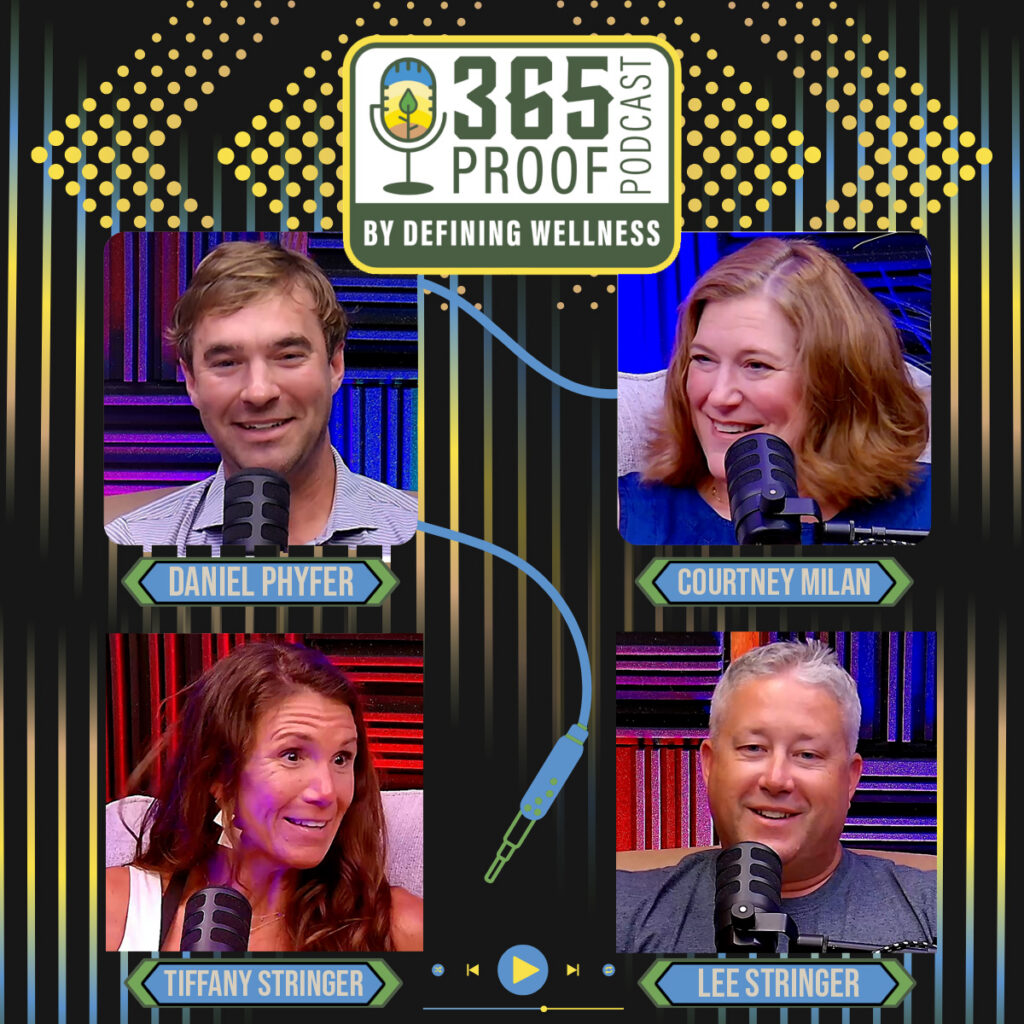
Lee and Tiffany Stringer Building Camaraderie Through Fifth Squad
8/11/2026
|
58:10
In Episode 20 of 365 Proof by Defining Wellness, Daniel Phyfer and Courtney Milan sit down with Lee and Tiffany Stringer of Fifth Squad, a veteran led nonprofit creating connection, support, and community for veterans, service members, and their families.
Lee shares his journey from enlisting in the Army to serving overseas, navigating the transition home, and finding renewed purpose through serving others. Together, Lee and Tiffany discuss the power of camaraderie, the unique needs of military families, Fifth Squad’s events and assistance programs, and why taking care of yourself and your relationships matters when your life is built around helping others.
This is an honest conversation about service, resilience, family, and finding your people after the uniform comes off.
Produced by Daniel Anderson at Audio Alchemy Productions.
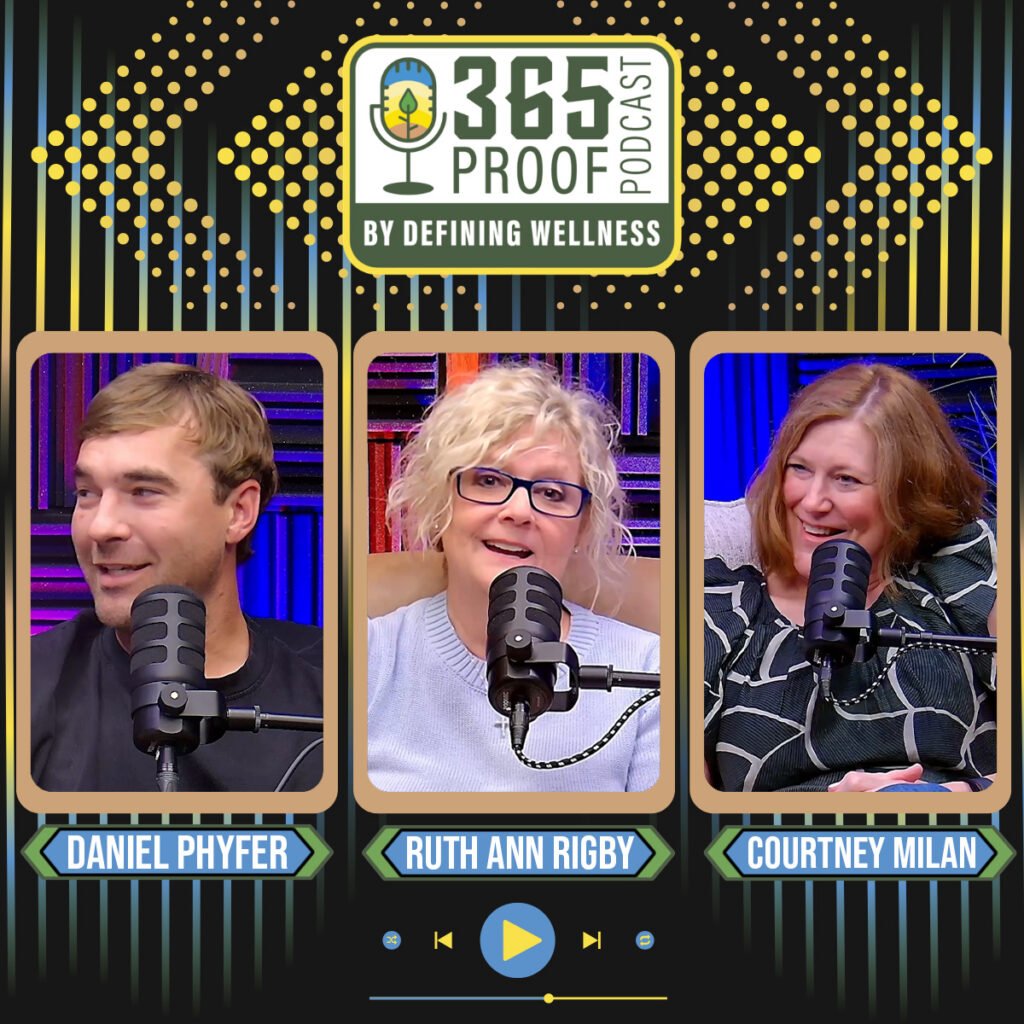
Making a Difference Wherever Your Feet Are: Ruth Ann Rigby’s 29-Year Recovery Journey
7/28/2026
|
1:16:48
Episode #19: Making a Difference Wherever Your Feet Are: Ruth Ann Rigby’s 29-Year Recovery Journey. In Episode 19 of 365 Proof by Defining Wellness, Daniel Phyfer and Courtney Milan welcome longtime friend, colleague and recovery advocate Ruth Ann Rigby for a candid conversation about survival, surrender and a life devoted to serving others.
With 29 years in long-term recovery, Ruth Ann shares how growing up in a family affected by addiction, enduring traumatic experiences and reaching a personal breaking point ultimately led her to treatment. She reflects on the acceptance, spiritual surrender and willingness to follow direction that became foundations of her recovery.
Now the chief development officer of Capstone Wellness and a co-founder of First Responders of Mississippi, Ruth Ann has dedicated her career to helping individuals and families find the right care when they need it most. The conversation explores the distinctive challenges first responders face, the importance of family involvement, the narrow window for connecting someone with treatment and why genuine human connection remains essential in behavioral healthcare.
Honest, heartfelt and filled with Ruth Ann’s unmistakable humor, this episode is a powerful reminder that recovery is possible—and that keeping it means giving it away.
Produced by Daniel Anderson at Audio Alchemy Productions.
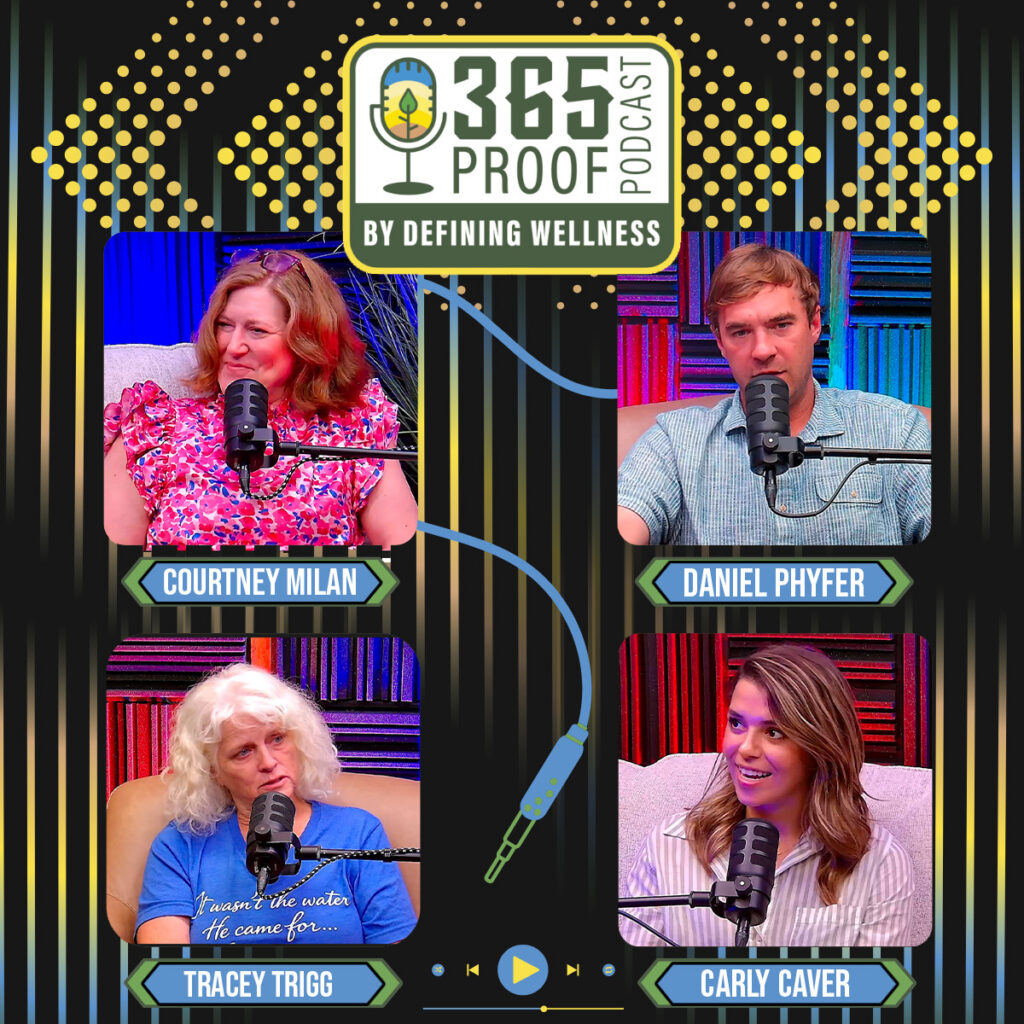
From Trauma and Silence to Purpose: Tracey Trigg’s Mission to Help Survivors Reclaim Their Lives
7/14/26
|
53:23
In Episode 18 of the 365 Proof Podcast by Defining Wellness, Daniel Phyfer, Courtney Milan, and Carly Caver welcome Tracey Trigg, founder and CEO of Loving Through His Eyes, a Mississippi-based nonprofit dedicated to helping women heal from trauma, abuse, exploitation, and human trafficking.
Tracey courageously shares her journey from childhood sexual abuse, shame, bullying, and a severe stutter to surviving multiple armed robberies, post-traumatic stress disorder, depression, anxiety, isolation, and suicidal thoughts. For years, fear controlled her life and left her feeling as though she had no voice. Through faith, community, Celebrate Recovery, and a willingness to confront the pain she had carried for decades, Tracey began reclaiming her identity, confidence, and purpose.
She also explains how mission work in Liberia and the Philippines helped shape her calling to advocate for people who feel unseen and unheard. That calling eventually led her from California to Mississippi, where she founded Loving Through His Eyes.
The conversation explores human trafficking awareness, online grooming, the vulnerability of children and teenagers, the relationship between trauma and addiction, and the importance of creating safe, long-term recovery environments. Tracy shares her vision for a residential program where women can receive trauma-informed care, participate in art, dance, equine, and faith-based recovery programs, develop practical life skills, continue their education, and gradually prepare for independent living.
The episode also highlights the immediate needs of Loving Through His Eyes, including renovations, heating and air-conditioning work, flooring, contractors, financial support, church partnerships, volunteers, and community members willing to help transform the property into a safe and restorative home.
This is a powerful conversation about survival, faith, healing, human trafficking prevention, and what can happen when someone who once felt voiceless chooses to become a voice for others.
Content notice: This episode includes discussions of childhood sexual abuse, sexual assault, armed violence, human trafficking, suicidal thoughts, trauma, and addiction.
If you or someone you know is experiencing abuse, exploitation, or trafficking, reach out to a trusted person, qualified professional, local law enforcement agency, or an appropriate crisis support organization. You deserve to be heard, protected, and supported.
Follow the 365 Proof Podcast by Defining Wellness for more honest conversations about mental health, addiction recovery, trauma, faith, resilience, and finding purpose through lived experience.
#365ProofPodcast #DefiningWellness #TraumaRecovery #HumanTraffickingAwareness #MentalHealthPodcast #SurvivorStories #CelebrateRecovery #FaithAndHealing #PTSDRecovery #MississippiNonprofit